 EnergyDataDesk
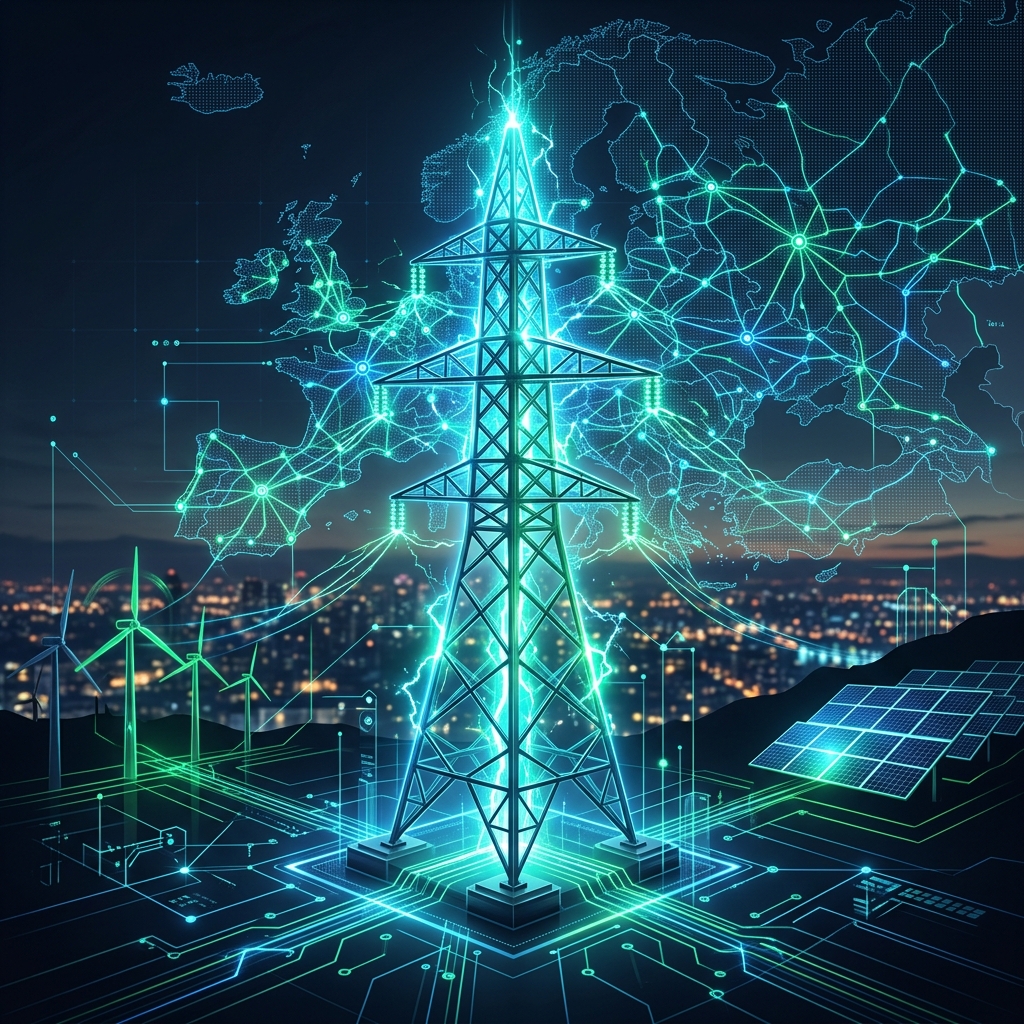
Europe is experiencing an unprecedented boom in clean energy. According to recent data, wind and solar power now generate over 30% of all electricity in the European Union. However, while investments in solar panels and wind turbines are growing at a record pace, we have hit an invisible but critical obstacle: electricity grids.
European infrastructure was designed in the last century for a completely different model—built around a few large, stable coal and nuclear power plants. Today, it must cope with millions of small, decentralized, and variable sources. The result? Grids are congested and struggle to transmit the newly generated clean power.
The Transition Bottleneck: What the European Commission Revealed
In its landmark “European Grids Package”, the European Commission made it clear that without a massive modernization of power lines, the green transition will fail. By 2040, system planners estimate that a staggering €1.2 trillion must be invested in European grids.
This sum is divided into two primary areas:
- €730 billion for distribution grids: These low and medium-voltage networks directly connect households, rooftop solar systems, electric vehicle chargers, and heat pumps. This is where the pressure for digitalization and capacity expansion is highest.
- €477 billion for transmission grids: These are the high-voltage "highways" that transport electricity over long distances and handle cross-border flows between EU member states.
If we fail to make these investments, up to 310 TWh of clean energy could go to waste by 2040—an amount equivalent to the annual electricity consumption of Italy. We will simply have to curtail this clean power because the grid cannot absorb it.
A Three-Year Wait for Grid Transformers
Lack of capital is not the only issue. Manufacturers of electrical components face an immense backlog of orders. Key elements, such as large grid transformers, currently have lead times of 3 to 4 years. Energy utilities have the funds to invest but literally lack the hardware to reinforce the grids. Furthermore, permitting processes for new transmission lines remain slow, taking over 8 years in some EU countries.
The Future Lies in Smart Grids and Storage
The path forward requires a combination of two solutions:
- Digitalization (Smart Grids): Grids must become intelligent. Using sensors and demand-side management, we must train appliances (e.g., EV chargers) to consume power when the sun is shining and electricity is abundant.
- Energy Storage: Grid-scale battery storage helps stabilize the network during critical hours (such as the evening peak when solar generation rapidly declines).
Want to see how cross-border flows and the current generation mix affect grid stability and spot prices in real-time? Visit our interactive EnergyDataDesk App.